
Staging is your single most powerful marketing tool when selling a house. This isn’t just about fluffing pillows—it’s the art of turning your property from a simple listing into a buyer’s must-have future home. We’re talking about creating an emotional pull so strong it helps buyers see their life unfolding within your walls, which almost always leads to a faster sale at a higher price.
You’re not just selling a house; you’re telling a story, and the buyer is the hero.
Why Home Staging Is Your Secret Weapon in LA
In a market as intense and style-conscious as Los Angeles, selling a home is about more than just location and square footage. You’re selling a lifestyle, a vibe, a dream. Home staging is how you translate your home’s potential into a story that buyers can’t resist. It’s the difference between telling someone a house is great and showing them why their life would be ridiculously awesome in it.
This isn’t about hiding flaws or tricking anyone. It’s pure psychology, deployed with style.
When buyers enter an empty house, they see odd dimensions and immediately start worrying if their oversized sectional will fit. When they walk into a cluttered, highly personal space, they feel like they’re intruding on your life. Both scenarios create a mental block.
Good staging obliterates those mental hurdles.
- It defines the space. A well-placed rug, a cool reading chair, or the right-sized dining table shows people exactly how to live in each room. No guesswork needed.
- It builds an emotional bridge. Neutral, inviting decor gives buyers permission to mentally “move in.” They start picturing their morning coffee on the patio or having friends over for dinner. This is a transaction based on emotion, and staging is your ace.
- It justifies your asking price. Staging spotlights a home’s best features—the light, the flow, the view—making the price tag feel not just fair, but like a fantastic value.
The impact is real and measurable. Just look at the breakdown.
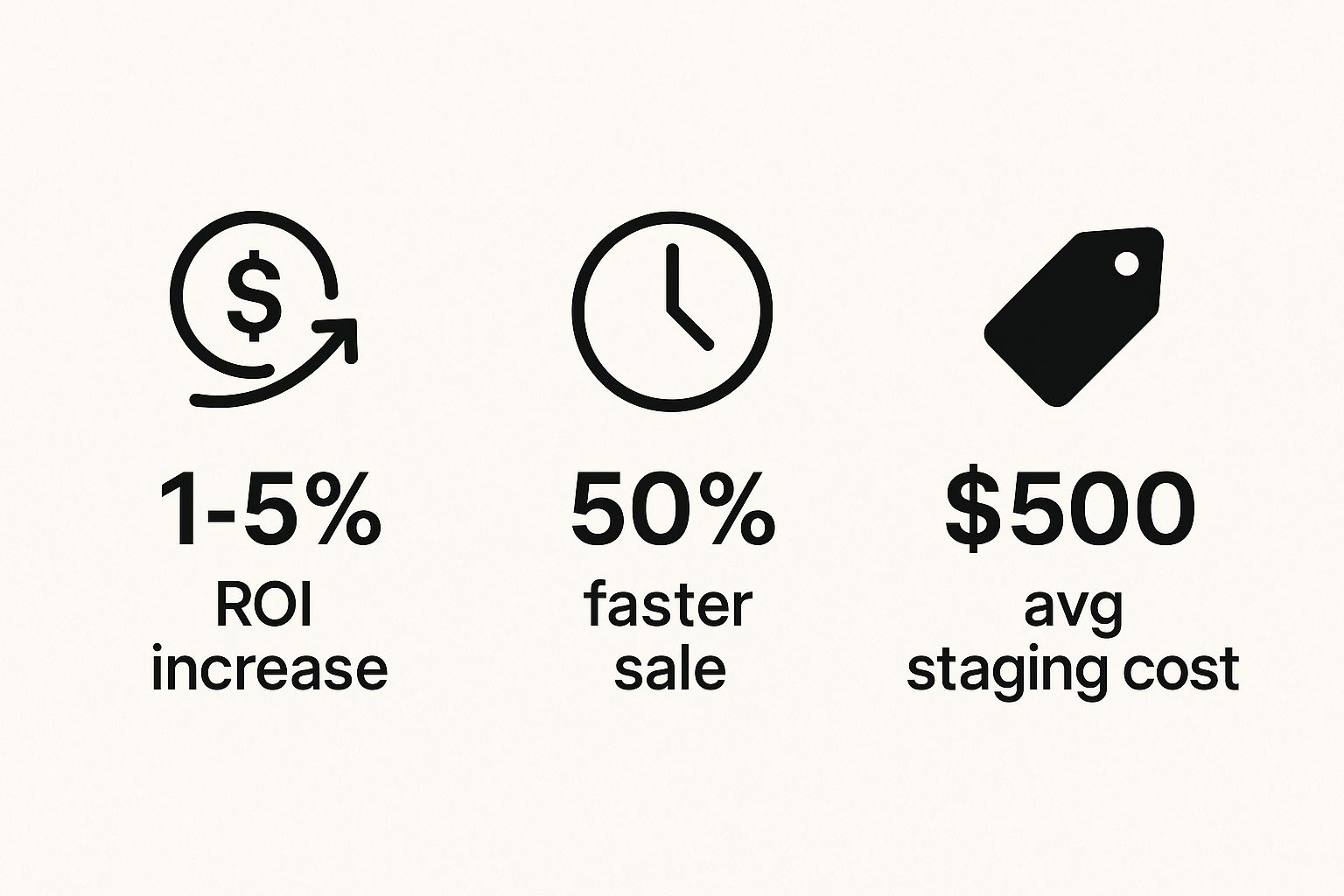
As you can see, a relatively small investment in professional staging can dramatically speed up your sale and boost your final offer. It’s one of the smartest financial decisions a seller can make.
At a Glance: The ROI of Key Staging Actions
To make it even clearer, here’s a quick look at where your staging dollars make the biggest impact. These are the moves that consistently deliver killer returns for our clients across LA’s diverse neighborhoods.
| Staging Action | Average Cost | Potential Impact on Sale Price | Key Benefit |
|---|---|---|---|
| Decluttering & Deep Cleaning | $300 – $800 | 1-3% | Instantly makes the space feel larger and better maintained. It’s non-negotiable. |
| Fresh Neutral Paint | $2,000 – $6,000 | 3-5% | Creates a clean, bright canvas for buyers to project their own style onto. This is your highest ROI move. |
| Professional Staging (Vacant) | $3,000 – $8,000+ | 5-15% | Solves the “empty room” problem and creates a powerful emotional connection. Essential for vacant properties. |
| Curb Appeal Boost | $500 – $2,500 | 2-4% | Makes a killer first impression before buyers even step inside. This is where the sale begins. |
These actions aren’t just cosmetic fixes; they are strategic investments designed to maximize your home’s appeal and, ultimately, your profit.
The Numbers Don’t Lie
The data on staging is overwhelming. A recent survey by real estate associations found that 81% of buyer’s agents said staging made it easier for their clients to visualize a property as their future home. On top of that, sellers’ agents consistently report a major drop in the time a staged home sits on the market.
It’s an investment that pays for itself, every single time.
You’re not just selling four walls and a roof; you’re selling an aspirational lifestyle. A beautifully staged home gives buyers permission to fall in love.
Staging is a critical piece of any strategy aiming for a fast and profitable sale. If that’s your goal, you should also check out our full guide on how to sell a house fast in this market. And for a deeper dive, these essential home staging tips are a fantastic resource.
Create a Blank Canvas That Inspires Buyers
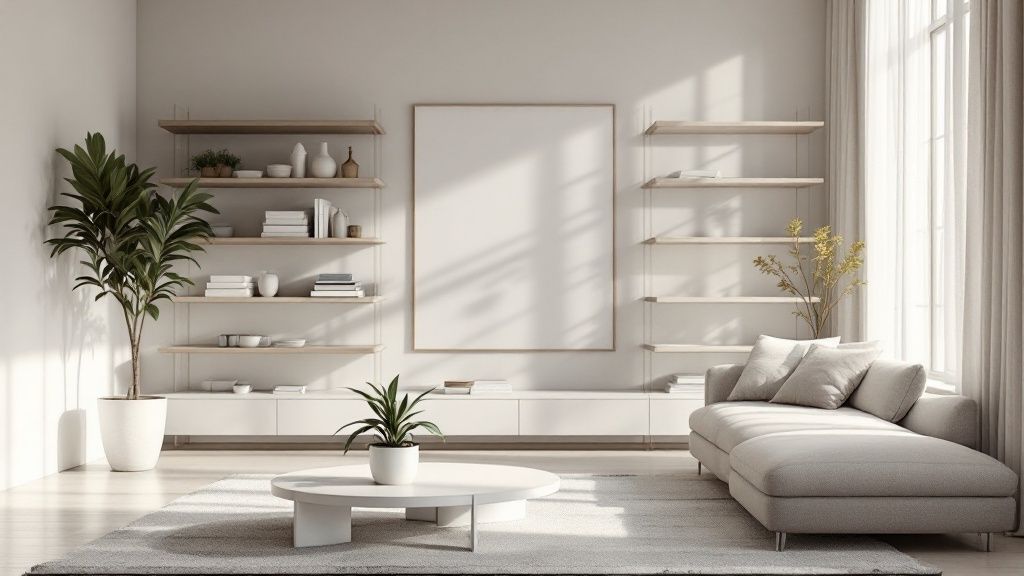
Before you can add a single stylish pillow, you have to subtract your entire life story from the property. I can’t stress this enough: creating a blank canvas is the single most important step in staging. It’s about giving buyers the mental space to project their future onto your walls, not stare at your past.
This isn’t a quick weekend tidy-up. This is a full-scale, strategic purge. The mission is to depersonalize and declutter every square inch of your home. We’re not erasing all personality, just editing it way down so the home’s best features—the light, the space, the layout—can finally take center stage.
Buyers need to see potential, not your personal effects. A mantle full of family photos might feel like home to you, but to a buyer, it’s a constant, glaring reminder that they are standing in a stranger’s house. That creates an emotional barrier you simply can’t afford.
The Great Depersonalization Mission
Your first job is to pack up anything that screams “you.” I know this part is tough, but it’s non-negotiable. Walk through your home with the cold, objective eye of a stranger and remove anything that tells a personal story. Remember, all people must be welcome to envision their lives here, and personal items can unintentionally exclude some from that vision.
This means packing away things like:
- Family photos and portraits. Get them off the walls, shelves, and especially the refrigerator.
- Personal collections and memorabilia. Your prized vinyl collection or travel souvenirs need to go into storage for now.
- Distinctive or polarizing artwork. That edgy piece you love might be a major turn-off for someone else. Stick to neutral, appealing art.
- Kids’ drawings and report cards. They’re charming to you but are just a distraction for buyers.
This process allows a potential buyer to mentally move their own stuff in—the crucial step right before they decide to make an offer. You’re clearing the way for their imagination.
Think of your home as a high-end hotel suite. It’s clean, stylish, and completely impersonal. You want buyers to feel like they’re the first and only people who could ever live there.
The Art of Strategic Decluttering
Once the personal items are gone, it’s time to go to war with clutter. Most of us have no idea how much stuff we’ve piled up until it’s time to move. Clutter is a thief; it steals visual space, making rooms feel smaller and more chaotic than they really are.
You need to create a feeling of spaciousness everywhere, especially in storage areas.
Living Room & Surfaces:
I tell every client to adopt the “Rule of Three.” On any given surface—a coffee table, a console, a bookshelf—style it with a maximum of three simple, well-chosen objects. A small plant, a nice candle, and a stack of books looks chic and intentional. Twenty knick-knacks just looks messy.
Closets & Storage:
Closets are a major selling point. And trust me, buyers will open them. Your goal should be to have every closet 50% empty. It sounds extreme, but a half-full closet screams “plenty of storage!” Pack up off-season clothes and anything you don’t use daily. Make sure the hangers match and everything is neat.
Kitchens & Bathrooms:
Clear those counters. In the kitchen, store away everything except a few key items like a nice coffee maker or a bowl of fresh lemons. In the bathroom, all personal hygiene products—shampoo, toothbrushes, razors—must be hidden away. Buyers really don’t need to see your brand of toothpaste.
This meticulous editing transforms your personal space into a marketable product that gets top dollar.
Design a Natural and Inviting Flow
Alright, the clutter is gone and your personal items are boxed up. Now we arrange what’s left. This is the critical moment where we shift from thinking about how you live in your home to how a buyer will experience it for the first time.
The mission is to create an effortless path that pulls visitors through the space, making the whole property feel connected, intuitive, and bigger than it is.
Think of yourself as a director staging a scene. You want to control where people walk, what they see, and how they feel as they move from room to room. A clumsy layout creates physical and mental roadblocks. A thoughtful one feels completely natural and subtly puts the home’s best features in the spotlight. This isn’t about interior design dogma; it’s about creating a sense of purpose and movement.
Create Breathing Room for Furniture
Here’s one of the biggest staging mistakes sellers make: pushing every piece of furniture flat against the walls. The logic seems sound—you’re trying to create a bigger open area in the middle, right? Wrong. Ironically, this makes most rooms feel smaller and more static.
The professional move is to pull your furniture away from the walls. Even just a few inches makes a world of difference. This simple trick creates “breathing room” around each piece, giving the illusion of a larger, airier space. It lets light and air circulate, turning a static box into a dynamic living area.
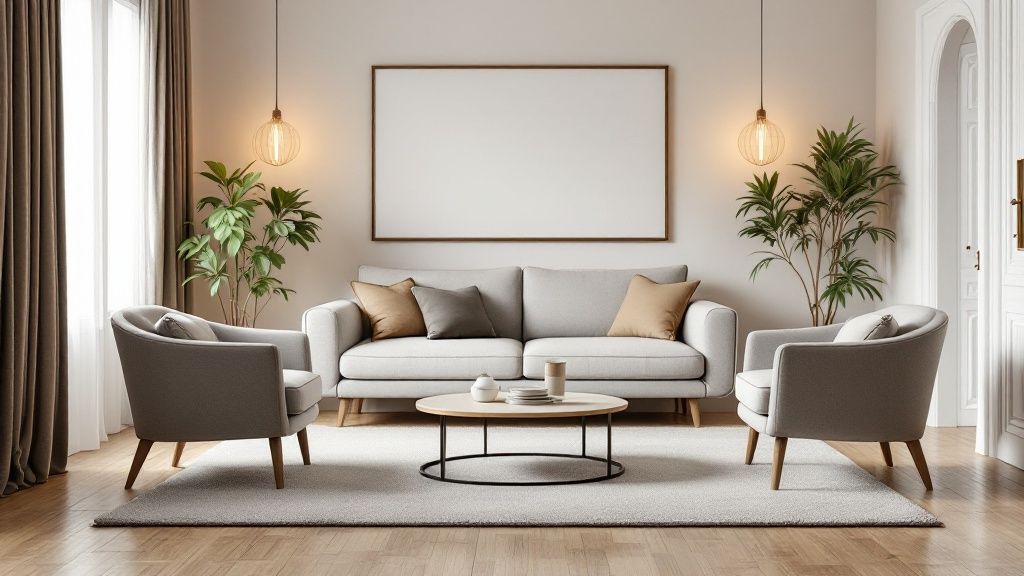
Take the living room, for example. Instead of lining the walls, create a central conversation hub.
- Pull the sofa off the wall.
- Angle two armchairs to face it.
- Anchor the whole grouping with a great area rug.
This simple arrangement defines the living “zone” and creates obvious, walkable pathways around it, rather than forcing people to awkwardly cut through the middle. It’s a small change with a massive impact on how buyers perceive the room’s size and function.
Define Zones for Every Space
Every single area in your home needs a clear job. This is non-negotiable. It helps buyers instantly understand how they could use the space, which is especially important in open-concept layouts or rooms with awkward corners. You’re taking the guesswork out of the equation and showing them the floor plan’s full potential.
Your job is to create “vignettes” of life within each room. Don’t just show them an empty corner; show them a perfect reading nook. Don’t show them a long, empty wall; show them an ideal spot for a home office.
Here are a few go-to strategies for defining zones:
- Rugs are your best friend. Seriously. Use area rugs to visually anchor different zones, like a seating area in the living room or the dining space in a great room.
- Create functional moments. A slim console table in an entryway immediately defines a landing spot for keys and mail. A single comfy armchair with a small side table near a window instantly becomes a cozy reading spot.
- Make the bedroom a sanctuary. The bed is the star of the show here. Position it on the main wall—the one you see right when you walk in. This move immediately grounds the room and makes it feel balanced. Add a pair of matching nightstands and lamps for that touch of hotel-like symmetry and calm.
By thoughtfully arranging your furniture, you’re not just decorating; you’re crafting a compelling story that guides buyers on a seamless journey through what could be their new home.
Set the Mood with Light and Color
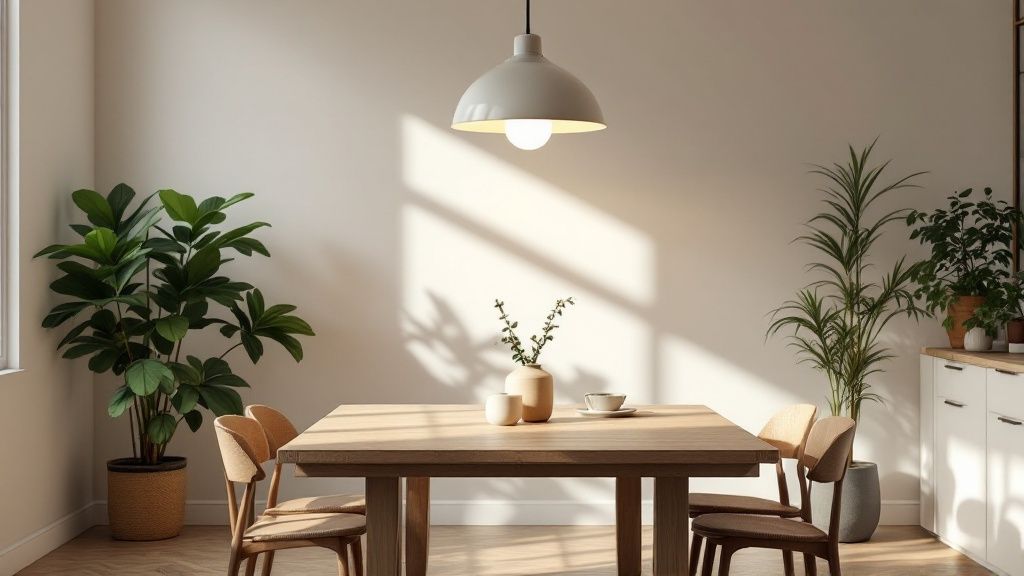
Now that you’ve got a clean slate and perfect flow, it’s time to create the vibe. This is where we manufacture the atmosphere that makes a buyer feel instantly at home—that subconscious pull that makes them linger a little longer and start mentally placing their own sofa.
It all boils down to two of the most powerful tools in any stager’s kit: light and color. Great lighting isn’t just about making a room bright; it’s about making it feel warm, inviting, and emotionally resonant. The right color palette can make a space feel larger and more modern, triggering an emotional connection before a buyer even realizes it’s happening.
Layering Your Lighting for Impact
Forget thinking one overhead fixture can do all the heavy lifting. It can’t. Professional staging demands a more sophisticated, three-layered approach to lighting. Each layer has a specific job, and when they work together, the result is pure magic.
- Ambient Lighting: This is your foundation. It’s the general, all-over light from recessed cans, chandeliers, or flush-mount fixtures that provides a comfortable level of brightness throughout the room.
- Task Lighting: This is focused, functional light that signals how a space is used. Think under-cabinet lights in the kitchen, a stylish reading lamp next to a cozy armchair, or a desk lamp defining a home office nook. It shows buyers the lifestyle the home offers.
- Accent Lighting: This is where you add the drama. Use picture lights or spotlights to highlight your home’s best assets—a cool architectural detail, a piece of art, or a beautifully styled bookshelf. It tells the buyer’s eye exactly where to look.
Your light bulbs matter more than you think. Swap out any of those cool, blue-toned bulbs for ones in the 2700K-3000K range. This temperature casts a warm, inviting glow that mimics natural light, making every room feel cozier and more welcoming. It’s a small change with a massive impact.
Master the Power of Neutrals
Your personal color choices are just that—personal. When you’re staging a home, that bold accent wall you love can be a major turn-off for buyers. The goal is to create a chic, sophisticated backdrop that allows potential buyers to project their own lives and belongings onto the space.
This is exactly why designers and pro stagers lean so heavily on a neutral palette.
And no, we’re not talking about boring, flat beige. Modern neutrals have depth and warmth. Think of shades like a soft greige (that perfect mix of grey and beige), warm off-whites, and muted taupes. These colors are the ultimate chameleons; they make rooms feel larger, reflect light beautifully, and appeal to the widest possible audience. A fresh coat of the right neutral paint offers one of the highest returns on investment you can make. Period.
Once that neutral foundation is in place, you can bring personality back in with carefully chosen accessories. These are the elements that are easy to swap out but make a huge impact.
- Throw pillows and blankets on sofas and beds.
- A striking piece of abstract art.
- A vibrant area rug to anchor a seating area.
- Fresh greenery or a colorful floral arrangement.
This approach gives you a high-end, intentional look without alienating anyone. It’s the perfect balance of blank canvas and curated style, making buyers feel like they’ve just walked into a model home designed just for them.
Focus on Details That Signal Quality
You’ve decluttered, arranged the furniture, and perfected the lighting. Good. You’re almost there. But now comes the final, crucial layer—the small, thoughtful details that take your home from “for sale” to truly unforgettable. This is what separates a good staging job from a great one.
These finishing touches are powerful psychological cues. They signal to buyers that your home has been meticulously cared for, which builds trust and justifies your price. When buyers see these subtle signs of quality, they subconsciously assume the same level of care extends to the stuff they can’t see—the plumbing, the roof, the foundation. It’s a shortcut to credibility.
Turn Your Bathroom into a Spa Retreat
The bathroom is a deeply personal space, and the goal is to make buyers feel nothing but comfort and a little bit of luxury. Think boutique hotel spa—clean, serene, and aspirational.
First, erase all signs of actual daily life. Hide the toothbrushes, the half-used shampoo bottles, and the toilet brush. No exceptions. Then, intentionally add back just a few key elements:
- Pristine White Towels: Buy a new set of fluffy, white bath towels. Fold them perfectly over the towel bar. These are for show only.
- A Touch of Greenery: A small orchid or a few eucalyptus stems in a simple vase adds life and a sense of freshness without feeling cluttered.
- Simple Styling: On the counter, place a small tray holding a high-end hand soap, a nice lotion, and maybe a small, unscented candle. Keep it minimal.
This isn’t about showing your daily routine; it’s about selling a fantasy of a perfectly organized, stress-free life.
Set a Scene for Connection
Staging is storytelling. You’re not just selling rooms; you’re selling the idea of a life lived within them. You want your story to be about connection, celebration, and relaxation. The dining room is the perfect place to set this scene.
Don’t just leave the table bare—that feels empty and sterile. Set it for an elegant, understated dinner party. You don’t need a full five-course setup. Just a neutral-colored runner down the center, some stylish placemats, and simple white plates with clean glassware will do the trick. This one simple act invites buyers to imagine hosting their own friends and family, creating an immediate emotional bond with the space.
Think of your home as a stage and every room as a scene. The details are your props, and they should all support one single narrative: “A wonderful life happens here.”
Don’t Neglect Your First Impression
Your curb appeal is the opening act. It sets the tone before a buyer even steps through the door, and you don’t need a massive landscaping overhaul to make a huge impact.
Instead, focus on high-impact, low-effort fixes for the entryway. A fresh coat of paint on the front door in a classic color like black or deep navy can work wonders. Update the hardware, put down a new, stylish welcome mat, and add a pair of beautiful planters with fresh flowers or greenery flanking the door.
And for goodness sake, make sure your windows are sparkling clean. It makes a huge difference. Looking for ideas? Exploring different window styles that boost curb appeal can instantly elevate a home’s character and make that first impression count.
These final touches are directly tied to the perceived value of your home. They are a core part of the overall strategy when you’re figuring out how to price your home for the market for a successful sale.
Your Top Home Staging Questions Answered
Alright, we’ve gone through the nuts and bolts of staging. But I know you’ve still got questions buzzing around in your head. Every seller does.
Let’s get straight to it and tackle the big ones I hear all the time.
Should I Stage My Home Myself or Hire a Professional?
This is the million-dollar question, isn’t it? The real answer comes down to your budget, your timeline, and—let’s be honest—your eye for design. If you’ve got a knack for it and are ready for some serious work, DIY staging can save you cash upfront.
But a professional stager isn’t just decorating. They bring an objective, market-driven perspective that’s almost impossible to have when you’re emotionally attached to your own home. They know precisely what LA buyers are looking for right now, have warehouses full of furniture that fits perfectly, and can pull it all together in days, not weeks. Think of it less as an expense and more as a strategic move to get a higher offer. It almost always pays for itself.
What Is Virtual Staging and Is It Effective?
Virtual staging is a total game-changer, especially for empty houses. It’s exactly what it sounds like: graphic artists digitally add furniture and decor into photos of vacant rooms.
And yes, it’s incredibly effective. A staggering 90% of buyers begin their property search online. Listings with photos of big, empty, soulless rooms get ignored. Virtual staging fixes that instantly, helping buyers see the home’s potential before they even step inside. It makes your listing jump off the screen and pulls more people into your open house.
You can’t sell a house if buyers don’t even click on the listing. Virtual staging makes sure that first digital impression is a powerful one.
Getting buyers in the door is just the first step. You also need to know how to prepare for a home inspection to ensure the deal doesn’t fall apart later.
How Much Does Home Staging Cost and Is It Worth It?
Let’s talk money. Staging costs can be all over the map, from a few hundred bucks for a consultation to several thousand for a full staging of a vacant home.
That number might make you flinch, but the ROI is where the real story is. Time and time again, staged homes sell for more money and sit on the market for far less time. Staging isn’t just a cost—it’s a marketing tool designed to protect your equity and get you the best possible price. The real question isn’t whether you can afford to stage, it’s whether you can afford not to.
Navigating the LA real estate market requires a team that understands every angle of the selling process, from staging to closing. At ACME Real Estate, we provide the expert guidance you need to make your sale a success. Contact us today to get started.