
Think of the homestead exemption as the single biggest “coupon” you’ll ever get for your house. It’s a recurring discount on your property taxes, but here’s the catch: you have to ask for it. It’s a legal provision that tells the government, “Hey, this is my primary home,” and in return, they calculate your tax bill based on a lower value. This is a move that can save you real money, year after year.
Unlocking Your Biggest Homeowner Perk
For a lot of homeowners, “homestead exemption” sounds like something out of a dry law textbook. But its purpose is incredibly straightforward: to lower your property tax bill. It’s one of the most powerful financial tools you have as a homeowner, yet so many people miss out simply because they don’t know they need to apply for it.
At its core, the exemption works by shielding a chunk of your home’s value from being taxed. This protection ensures you’re not paying taxes on the full assessed value of your home. Instead, the local government subtracts a specific dollar amount or a percentage first, creating a lower taxable base to work from.
How the Savings Add Up
Let’s put some real numbers to this. Imagine your home is assessed at $200,000, and your local property tax rate is 1%. Without any exemption, your annual tax bill would be $2,000.
But if you qualify for a $50,000 homestead exemption, the game changes. The taxable value of your home drops to $150,000. Now, that same 1% tax rate only generates a $1,500 bill. Just like that, you’ve put $500 back in your pocket for the year. For more on how these calculations work in different areas, you can check out some great examples at SmartAsset.com.
The best way to think about a homestead exemption is as a permanent discount on your home’s taxable value. It’s not a one-time deal. It’s an ongoing benefit that sticks with you for as long as you own and live in that home.
This quick table breaks down the essentials of what the homestead exemption really means for you as a homeowner.
Homestead Exemption At a Glance
| Benefit/Feature | What It Means for You |
|---|---|
| Reduced Taxable Value | Your property tax bill is calculated on a lower home value, directly cutting the amount you owe. |
| Annual Savings | This isn’t a one-off credit; you save money every single year you live in the home. |
| Protection from Creditors | In many states, it can protect some or all of your home’s equity from being seized by creditors. |
| Not Automatic | You must actively apply with your local tax authority. It’s not granted automatically at closing. |
Think of it this way: the government is essentially giving homeowners a financial break for putting down roots in the community.
This guide will walk you through exactly what you need to know about this critical homeowner benefit. We’ll cover how it works, who qualifies, and the steps to take to claim your savings.
How Homestead Exemptions Lower Your Property Taxes
So, how does this tax discount actually work its magic? It’s simpler than you might think.
Imagine your home’s total value is like the full sticker price on a brand-new car. The homestead exemption is basically a high-value coupon that your local tax authority lets you apply before they calculate the final tax.
This “coupon” chops a chunk off your home’s assessed value—the number the government uses to figure out your tax bill. It’s important to know this doesn’t touch your home’s market value or what you could sell it for. It just shrinks the number used for tax calculations, saving you real money.
Breaking Down The Math With An Example
Let’s walk through a real-world scenario. You’ll see the savings are surprisingly straightforward.
Say you own a home in Los Angeles County, and the county appraiser sets its assessed value at $600,000. For this example, we’ll use a property tax rate of 1%.
- Without the exemption: The math is simple. Your tax bill would be $6,000 for the year ($600,000 x 0.01).
Now, let’s factor in a homestead exemption. We’ll pretend your local exemption is a generous $75,000.
- With the exemption: The county first subtracts that $75,000 from your home’s assessed value. This drops your new taxable value all the way down to $525,000 ($600,000 – $75,000).
The 1% tax rate is then applied to that smaller number. Your new tax bill is just $5,250 ($525,000 x 0.01). Just like that, you’ve saved $750 this year alone, and that savings keeps coming every single year you live there. For a deeper dive into local tax specifics, our guide to property taxes in Los Angeles is a great resource.
The key takeaway is simple: the homestead exemption doesn’t change the tax rate. It just shrinks the amount of your home’s value that can be taxed in the first place, leading to real, year-over-year savings.
The Bigger Picture Of Tax Savings
This direct reduction in your taxable value is a powerful tool for homeowners, making ownership more affordable and predictable. It’s one of the most effective financial perks out there.
Beyond this, it pays to stay informed about other ways you can save. If you’re interested in learning more about the policies that can affect your bottom line, it’s worth your time understanding various tax breaks and cuts.
Ultimately, successfully claiming your homestead exemption puts more money back where it belongs—in your pocket. It’s a foundational piece of any smart homeownership strategy.
Protecting Your Home From Creditors

While saving a chunk of cash on property taxes is a fantastic perk, the homestead exemption has another powerful, often-overlooked job. It moonlights as a financial bodyguard for your home.
Think of it as an extra layer of armor for your biggest asset. This protection shields a designated amount of your home’s equity from being seized by certain creditors if you get hit with financial hardship or even bankruptcy. It’s a crucial safety net that helps keep your home a sanctuary, even when life throws you a curveball.
The Financial Shield in Action
So how does this creditor protection actually work? In simple terms, if you owe money on debts like medical bills or credit cards and a creditor gets a judgment against you, the homestead exemption stops them from forcing the sale of your home to pay it off—up to a certain limit, of course.
This protection is one of the key reasons why owning a home is often seen as a more secure investment. It creates a legal barrier that walls off your personal sanctuary from many types of financial storms, and that brings invaluable peace of mind. But while the concept is straightforward, the specifics of this protection can vary dramatically.
The core idea behind creditor protection is to prevent homelessness due to unexpected financial crises. By shielding a homeowner’s primary residence, the law recognizes just how important stable housing is for individuals and families.
The amount of equity protected depends entirely on where you live. Under federal bankruptcy law, homeowners can protect up to $125,000 in home equity acquired within the 1,215 days before filing. Some states, like Florida and Texas, are known for offering even more robust protections. You can see how experts leverage the homestead exemption to protect assets on wolterskluwer.com.
Understanding The Limits
It’s crucial to know that this shield isn’t invincible. The homestead exemption typically does not protect you from:
- Mortgage Lenders: If you don’t pay your mortgage, your lender can still foreclose. No surprise there.
- Property Tax Liens: The government can still force a sale for unpaid property taxes.
- Mechanic’s Liens: Contractors who did work on your home can place a lien for unpaid bills.
This protection is just one piece of a broader financial strategy. For more on using real estate for financial security, check out our deep dive on real estate investment tax benefits. While homestead exemptions offer a crucial defense for your home, you might also want to explore other powerful asset protection strategies to safeguard your wealth from other risks and lawsuits.
So, Do You Qualify for a Homestead Exemption?

Ready to claim this killer tax break? Before you can start slashing your property tax bill, you have to get past the velvet rope. The good news is the entry requirements for a homestead exemption are usually pretty simple, but they are absolutely non-negotiable.
Think of it like getting a local library card. You can’t just waltz in and start grabbing books off the shelf; you have to prove you actually live in the town. It’s the same deal here. To get a homestead exemption, you have to prove you own and live in the home you’re trying to shield from higher taxes.
While the nitty-gritty details can definitely shift from state to state, or even county to county, a few core requirements are almost universal. Nailing these is your first step to locking in those savings.
The Basic Eligibility Checklist
At its heart, qualifying for a homestead exemption boils down to a few fundamental truths. You’ll need to tick these boxes to prove that the property is your genuine home base, not just an investment.
Here’s a breakdown of what you’ll almost certainly need to prove:
- You’re the Owner: This one’s a no-brainer. Your name has to be on the property’s title or deed. It’s the foundational piece of the puzzle.
- It’s Your Primary Residence: This is the big one. The home must be where you live, eat, sleep, and get your mail. Vacation homes, rental properties, and that cabin you visit on weekends don’t make the cut.
- You Lived There by a Hard Deadline: Most places require you to own and occupy the home on a specific date, which is very often January 1st of the tax year you’re applying for. If you miss that date by even a day, you’ll likely have to wait a full year to try again.
The logic is simple: you have to prove the property is your “homestead” in the truest sense of the word. The government isn’t just handing out tax breaks for second homes or investment properties; they want to make homeownership more affordable for the actual people who live and vote in the community.
Are You Eligible for Extra Savings?
Beyond the standard exemption, many states offer even bigger tax breaks for certain groups of homeowners. These beefed-up exemptions are designed to give extra financial breathing room to those who might need it most.
It’s always worth checking if you fall into one of these categories. The extra savings can be substantial.
- Seniors: Homeowners over a certain age, usually 65, often qualify for a much larger exemption amount.
- Veterans: Many states have special provisions for military veterans, particularly those with service-related disabilities.
- Individuals with Disabilities: If you’re a homeowner with a qualifying disability, you may be eligible for a larger reduction in your home’s taxable value.
These specialized exemptions are a fantastic way to maximize your benefits, but they always come with extra paperwork. Make sure to check with your local county appraiser or tax assessor’s office to get the specific rules and forms for your area.
Navigating the Application Process with Confidence
Alright, you’ve confirmed you’re eligible. Now it’s time to actually claim your savings. The application process might seem like a mountain of government paperwork, but it’s really not.
Think of it less like doing your taxes and more like applying for a library card—you just need the right documents and to hit the deadline. We’ll give you the map to get through this maze without any wrong turns.
Your Step-by-Step Application Plan
Getting your homestead exemption approved comes down to being organized and paying attention to the details. The good news is that most local governments—usually the county tax assessor or property appraiser—have put this whole process online, making it easier than ever.
The key is to start early and get your documents in a row before you sit down to fill anything out. Here’s a simple, four-step plan to get it done:
- Find the Official Form: Your first move is to head to your local county property appraiser’s or tax assessor’s website. Look for a section on “Exemptions” or “Homestead.” That’s where you’ll find the official application. Download it and actually read the instructions.
- Gather Your Proof: This is where you prove the property is your one-and-only primary home. You’ll need copies of documents that tie you to that specific address. This is a critical step, much like proving you actually own the property in the first place. If you’re curious about how ownership is legally verified, check out our guide on what is title insurance.
- Submit Before the Deadline: This part is non-negotiable. Most places have a hard-and-fast deadline, often around March 1st, but this can definitely vary. Submitting even one day late usually means you’re out of luck until the next tax year.
- Confirm They Got It: Don’t just hit “submit” and assume you’re good to go. A week or so later, follow up with the office to confirm they received your application and that it’s complete. A quick phone call or email can save you a world of headaches down the road.
Documents You’ll Probably Need
To avoid any back-and-forth with the tax office, have these documents scanned and ready to upload. While the exact requirements change from place to place, they almost always want proof of who you are and where you live.
- A valid driver’s license or state ID card with the property’s address.
- Your vehicle registration showing that same address.
- A recent utility bill (in your name) for the property.
- Your voter registration card.
Pro Tip: Do not wait until the last minute. Missing the deadline is the #1 reason applications get rejected. Give yourself at least a few weeks of buffer time to deal with any unexpected hiccups.
How Homestead Exemptions Vary Across States
If you think the homestead exemption is a simple, one-size-fits-all rule, I’ve got some news for you. The reality is, these laws are a patchwork quilt of local regulations that are wildly different from one state to the next. What saves you a small fortune in Florida might barely make a dent in your tax bill in another state.
This isn’t just about the dollar amounts, though that’s a huge part of it. States have their own unique policies, deadlines, and special features that make local knowledge absolutely essential. Trying to apply another state’s rules to your own is like using a map of New York City to navigate the streets of Los Angeles. You’re going to get lost, fast.
State-By-State Showdown
The differences can be dramatic. Some states offer a modest flat-rate reduction off your home’s assessed value, while others give you a percentage-based discount. A few even add extra layers of protection that can make a huge impact on your long-term financial stability.
Let’s look at a few examples to see just how much the landscape changes:
- Florida’s Fortress: Florida is famous for its generous homestead protections. Besides a standard $50,000 exemption from assessed value, it also has a powerful ‘Save Our Homes’ cap that limits how much your property assessment can increase each year.
- Texas-Sized Savings: Texas mandates that all homeowners receive at least a $100,000 exemption from their school district property taxes. This was a significant boost that took effect in 2023, and local jurisdictions can offer even more on top of that.
- California’s High Bar: In California, the exemption is all about protecting your home’s equity from creditors. It shields at least $300,000 and can go as high as $600,000, depending on the median home prices in your county.
The biggest mistake homeowners make is assuming the rules they heard about from a friend in another state apply to them. Your property’s location is the single most important factor in determining what you can claim and how much you’ll save.
To give you a clearer picture of these differences, here’s a quick snapshot of how things look in these three states.
State Homestead Exemption Snapshot
This table offers a comparative look at homestead exemption benefits and rules in three key states, highlighting the importance of checking local regulations.
| State | Standard Exemption Amount (Example) | Key Feature |
|---|---|---|
| Florida | $50,000 off assessed value | ‘Save Our Homes’ cap limits annual assessment increases to 3% or inflation, whichever is less. |
| Texas | $100,000 off school district taxes | Mandatory statewide minimum with options for additional local exemptions. |
| California | $300,000 to $600,000 in equity | Protects a significant portion of home equity from unsecured creditors. |
As you can see, the focus and benefit of the exemption change completely depending on where you live.
One of the most impactful real-world examples of a state-specific policy is Florida’s ‘Save Our Homes’ amendment. This law, passed back in 1992, limits the annual increase in assessed value for homesteaded properties to the lesser of 3% or the rate of inflation. This is a game-changer that shields over 4 million Floridians from massive tax hikes when property values soar. You can find more details on how this powerful protection works on the Manatee County Property Appraiser’s site.
The visual below maps out the typical timeline for getting your exemption approved, from the day you submit your application to the final decision.
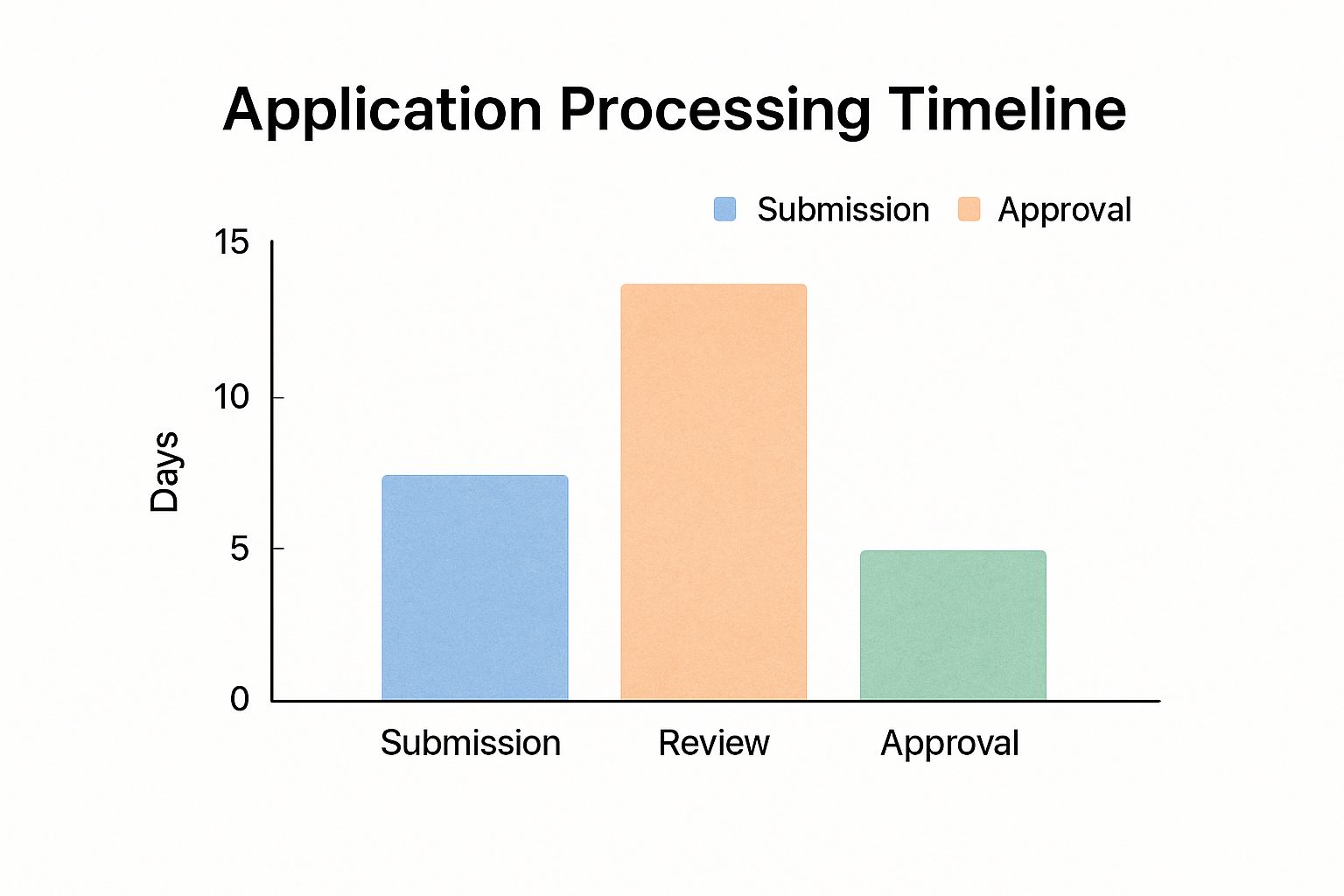
Notice how the review stage takes the longest? That’s why it’s so critical to get your application right the first time—complete, accurate, and on time.
When it comes down to it, your local county tax assessor or property appraiser’s office is your ultimate source of truth. Their website is the definitive guide for understanding exactly what a homestead exemption means in your neighborhood.
Frequently Asked Questions About Homestead Exemptions
Still got some questions? You’re not the only one. Let’s tackle the biggest points of confusion homeowners grapple with so you can get this done with zero doubt.
Do I Need To Reapply Every Year?
This is a huge one, but the short answer is usually no. For most people, the homestead exemption is a “one-and-done” deal. Once you’re approved, it should automatically renew every year as long as you still own the home and it’s your primary residence.
But life happens. If you get married, divorced, or add someone new to the title of your home, you might need to refile to update your status. Your best bet is to always check in with your local tax assessor’s office to know their specific rules.
What Happens If I Move?
Your homestead exemption is tied to you and that specific property. It doesn’t pack up and move with you.
If you sell your home and buy a new one, you have to start fresh with a brand-new application for the new property. This is a step people forget all the time in the chaos of moving. Make sure you get that application in for your new place before the deadline, or you risk missing out on a whole year of tax savings.
Think of it like this: your exemption is a key cut for a specific lock. When you move to a new house, that old key won’t work. You need a new key cut for the new lock, and that means filing a new application.
Can It Be Combined With Other Tax Benefits?
Absolutely, and you should look into it. The homestead exemption often stacks with other property tax relief programs. Many states offer separate, additional exemptions for seniors, military veterans, or individuals with disabilities. These aren’t mutually exclusive.
Qualifying for one of these specialized exemptions can seriously amplify your savings. It’s a smart move to dig into every benefit available. You don’t want to leave money on the table.
Navigating the world of property taxes and exemptions can feel like a maze, but you don’t have to go it alone. The team at ACME Real Estate lives and breathes this stuff. We’re here to guide you through every part of your homeownership journey in Los Angeles. Whether you’re buying, selling, or just have questions, we have the local knowledge to help you make the right calls. See what a team that knows LA inside and out can do for you at https://www.acmexserhant.com.